There is no
charge for entry to the Reserve but donations are, of
course, very much appreciated and go entirely towards
the cost of running and maintaining the Reserve. Visitors
may wander freely throughout the Reserve but, to avoid
disturbance to the wildlife, please keep to the pathways.
This is especially important during the nesting season.
Nest boxes should be left strictly alone.
The Reserve, extending to some 7 acres in total, has undergone
extensive work to create viable wetland and woodland habitats.
There are three ponds, two hides, four 'picnic areas'
with tables and a variety of circular woodland walks with
bench seats placed at frequent intervals where visitors
can stop and relax while they watch. There is an
extensive range of bird nesting boxes and regular feeding
brings the more popular birds close to the observer. Although
primarily intended as a haven for birds, the Reserve has
a very wide range of other interesting things to offer.
Common wildflowers include Ragged Robin, Marsh Marigold,
Bugle, Common Valerian, Greater Tussock Sedge (locally
rare), Teasel and much more (see Lists page for full details).
Peacock, Painted Lady and Small Copper butterflies are
common and there are numerous moths which are being assessed
over time. Dragonflies, Damselflies and Darters are seen
regularly during summer. There is a thriving population
of frogs and toads, palmate newts and a common lizard
has also been recorded. Mammals include Roe Deer, Fox
and Badger as well as the occasional Stoat in addition
to the inevitable collection of small mammals such as
Moles, Voles and Wood mice. Pipistrelle, Noctule and Long-eared
Bats may be seen at dusk. The damper areas of the Reserve
produce an autumnal crop of interesting fungi, including
the Alder Bracket fungus which is locally rare.
The main hide
(the 'Jock Dicerbo' hide, named after the Club President),
sited close to the entry gate, is always open. This hide
contains a considerable amount of bird watching information,
a visitors book and some birdwatching aids. From this
hide you can see most of the wetland area and view the
numerous waterfowl as well as many small birds coming
to the adjacent feeders.
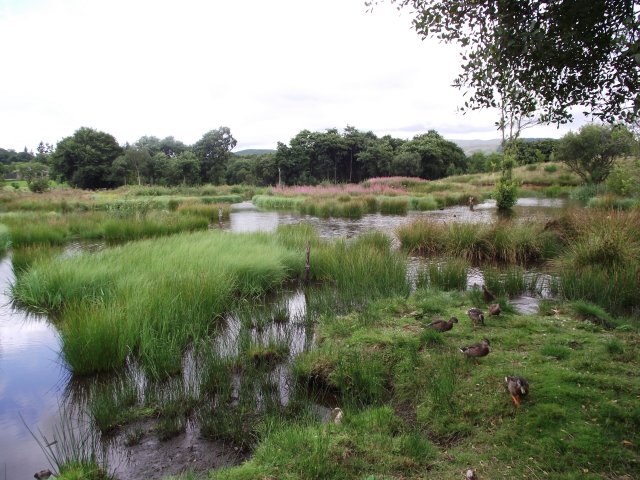
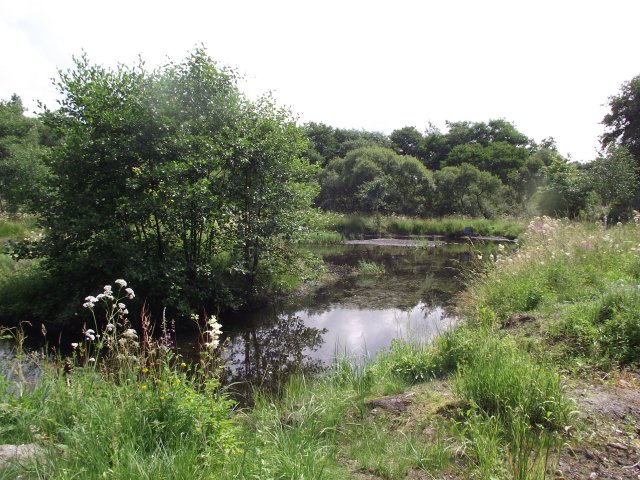
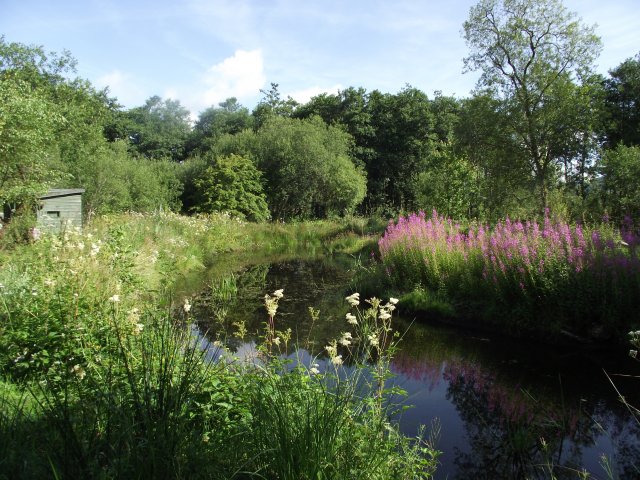
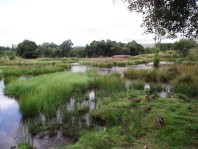 The
main pond has been dredged to provide a variety of water
depths to suit different kinds of waterfowl with sticklebacks
and minnows introduced as an additional food source. The
pond banks have a varied mixture of reeds and long grasses
to provide cover and suitable nesting sites for the various
species. Willow, beech, birch and alder trees provide
additional cover. A bank on the far side is suitable for
Sandmartins. Throughout the year you can expect to see
the resident population of Mallard and Moorhen while other
waterfowl such as Teal, Little Grebe, Canada Geese and
Wigeon visit on occasion. Various waders such as Snipe,
Jack Snipe and Sandpiper may also be seen. During summer,
nesting Sandmartins may be present and later in the year
a Kingfisher often visits in the hope of catching some
of the small fish. Feeders beside the hide ensure a fair
collection of small birds will always be seen and you
may also be mobbed by some very friendly ducks! Proceed
along the path alongside the wetland and you will find
a wide variety of trees and shrubs on the bank. In autumn,
many of these will be producing a number of different
fruits and berries that should appeal to our birds during
the winter.
The
main pond has been dredged to provide a variety of water
depths to suit different kinds of waterfowl with sticklebacks
and minnows introduced as an additional food source. The
pond banks have a varied mixture of reeds and long grasses
to provide cover and suitable nesting sites for the various
species. Willow, beech, birch and alder trees provide
additional cover. A bank on the far side is suitable for
Sandmartins. Throughout the year you can expect to see
the resident population of Mallard and Moorhen while other
waterfowl such as Teal, Little Grebe, Canada Geese and
Wigeon visit on occasion. Various waders such as Snipe,
Jack Snipe and Sandpiper may also be seen. During summer,
nesting Sandmartins may be present and later in the year
a Kingfisher often visits in the hope of catching some
of the small fish. Feeders beside the hide ensure a fair
collection of small birds will always be seen and you
may also be mobbed by some very friendly ducks! Proceed
along the path alongside the wetland and you will find
a wide variety of trees and shrubs on the bank. In autumn,
many of these will be producing a number of different
fruits and berries that should appeal to our birds during
the winter.
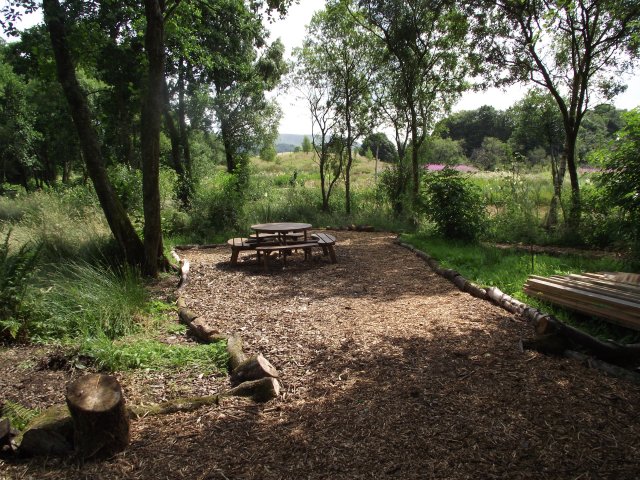
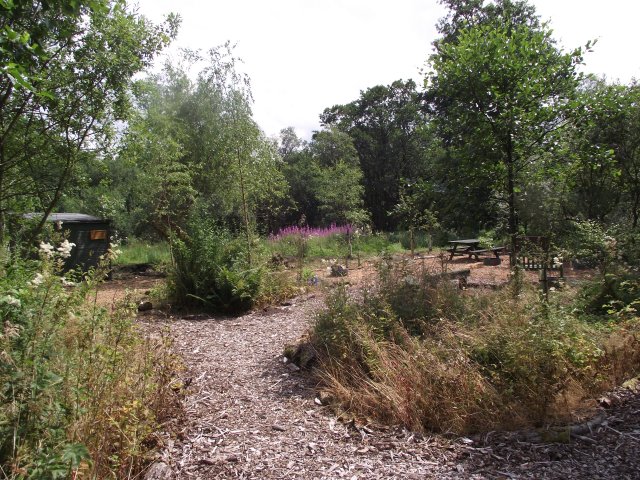
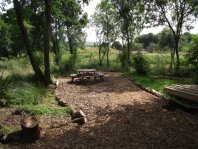 Our
'workshop' area lies just past the main pond. This area
has been enhanced to provide a 'leisure'area with bench
seats and a picnic table. There are bird feeders located
close by so you can almost certainly see a good selection
of small birds here - Chaffinches, Siskins and various
Tits - even the Great Spotted Woodpecker, normally a shy
bird, is becoming tolerant of human presence. A cock Pheasant
may also put in an appearance now and then.
Our
'workshop' area lies just past the main pond. This area
has been enhanced to provide a 'leisure'area with bench
seats and a picnic table. There are bird feeders located
close by so you can almost certainly see a good selection
of small birds here - Chaffinches, Siskins and various
Tits - even the Great Spotted Woodpecker, normally a shy
bird, is becoming tolerant of human presence. A cock Pheasant
may also put in an appearance now and then.
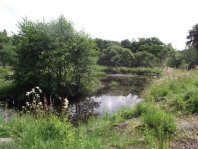
There is a choice of route from here. The more interesting
way is to keep to the left, along the western edge of
the reserve, and cross the small bridge, past the bird
feeding area to the middle pond. The middle pond lies
approximately in the middle of the reserve and is used
more sparsely by the wildfowl. Reeds and tall grasses
cover the margins and various water plants grow within
the pond itself to give a good habitat for insects and
amphibians that spend all or part of their lives in or
on water. During the summer there are good numbers of
damsel flies, darters and chasers around this pond. There
is a path going all around this pond, also linking to
the outer path at the far (eastern) side.
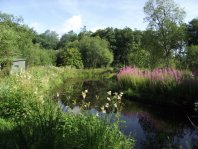 After
passing the Middle Pond, you enter the woodland area where
there is a good mix of trees and shrubs. Birch, beech,
alder, etc, underpinned by bushes gives a good habitat
for tits, chaffinches, robin, dunnock, etc. Some of the
prolific alder trees have been removed to open up 'flight
paths' to the ponds and some of the cleared areas are
being replanted with a variety of new trees. A third pond
has been created within the woodland area and the small
hide gives viewing over the pond and adjacent woodland.
This pond is another area where considerable numbers of
damselflies and dragonflies can be seen in summer. They
are out of sight, of course, but this pond also holds
a prolific population of Palmate Newts.
After
passing the Middle Pond, you enter the woodland area where
there is a good mix of trees and shrubs. Birch, beech,
alder, etc, underpinned by bushes gives a good habitat
for tits, chaffinches, robin, dunnock, etc. Some of the
prolific alder trees have been removed to open up 'flight
paths' to the ponds and some of the cleared areas are
being replanted with a variety of new trees. A third pond
has been created within the woodland area and the small
hide gives viewing over the pond and adjacent woodland.
This pond is another area where considerable numbers of
damselflies and dragonflies can be seen in summer. They
are out of sight, of course, but this pond also holds
a prolific population of Palmate Newts.
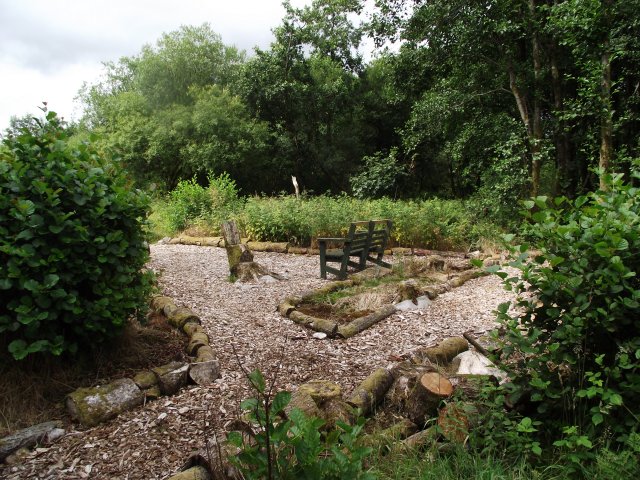
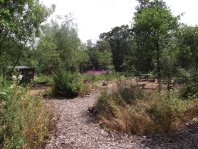 There
is another seating/picnic area here that has recently
been improved. Further seats and tables will be added
in due course. A number of tubs have been planted up using,
mainly, flowering plants intended to attract butterflies
and other insects.This is a lovely place to stop for a
break.
There
is another seating/picnic area here that has recently
been improved. Further seats and tables will be added
in due course. A number of tubs have been planted up using,
mainly, flowering plants intended to attract butterflies
and other insects.This is a lovely place to stop for a
break.
From this point you again have a choice of routes. If
you continue left along the path you will pass through
denser woodland where you may see/hear some of our smaller
woodland birds but not much else. The dense wood does
give rather deep shade but it is still a pleasant walk.
Alternatively you can take a short cut via the path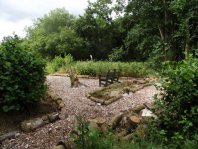 alongside the hide and around the top of the pond. Seasonally,
this area can be a blaze of colour with masses of wild
flowering plants and it holds many of our smaller birds.
In autumn there will be a crop of berries, mainly raspberries,
that will provide useful food. Either path will take you
to another seating area (with a 'high chair' cut from
a tree stump) and picnic table giving another idyllic
place to pause. There is also an excellent view of the
hills to the east. Continue right alongside the main ditch
and you will come to yet another 'picnic area' complete
with table and views to the hills. If you step cautiously
towards the bank you may well be lucky enough to see some
sticklebacks in the water. Following the path will take
you back to another ditch alongside the main wetland.
The path then follows this ditch to bring you back to
the workshop area. But you can also cross the ditch and
go up the bank to "Jock's seat" or even beyond
to another bench seat right at the top of the bank. Both
of these give superb views over the wetland area. The
path continues as far as the sluice bridge. We do not
recommend proceeding further as there is currently no
suitable path so return to the ditch and follow it to
the workshop area. The former path going alongside the
wetland side of the ditch had become too wet and muddy
so difficult to maintain so has now been fenced off -
please don't try to use it!
alongside the hide and around the top of the pond. Seasonally,
this area can be a blaze of colour with masses of wild
flowering plants and it holds many of our smaller birds.
In autumn there will be a crop of berries, mainly raspberries,
that will provide useful food. Either path will take you
to another seating area (with a 'high chair' cut from
a tree stump) and picnic table giving another idyllic
place to pause. There is also an excellent view of the
hills to the east. Continue right alongside the main ditch
and you will come to yet another 'picnic area' complete
with table and views to the hills. If you step cautiously
towards the bank you may well be lucky enough to see some
sticklebacks in the water. Following the path will take
you back to another ditch alongside the main wetland.
The path then follows this ditch to bring you back to
the workshop area. But you can also cross the ditch and
go up the bank to "Jock's seat" or even beyond
to another bench seat right at the top of the bank. Both
of these give superb views over the wetland area. The
path continues as far as the sluice bridge. We do not
recommend proceeding further as there is currently no
suitable path so return to the ditch and follow it to
the workshop area. The former path going alongside the
wetland side of the ditch had become too wet and muddy
so difficult to maintain so has now been fenced off -
please don't try to use it!
The 'Orchard'
area - (not immediately obvious) is an open area at the
extreme northern end of the Reserve. In conjunction with
Moffat CAN, this was planted up with fruit trees to form
an orchard. At this time, there is no footpath leading
through this area. The path ends by the storage shed at
the entrance to the orchard area. Cross the main ditch
via the bridge and then go upstream until you reach the
shed. If you wish to explore further be aware that it
is 'rough going'. Not a lot of wildlife to see at present
but, as the trees mature, there is considerable potential
for this area. Future plans are for a proper path and
possibly one or more picnic spots in this area.
As a measure
of its success, well over 100 species of bird have been
recorded on the Reserve since its creation. While many
are common and resident, quite a few are transient visitors,
some quite unusual, that have obviously been attracted
by what this area has to offer. There is a very strong
presence of Stock Doves on the reserve with often upwards
of six breeding pairs and, in 2013, a pair of Barn Owls
bred on the reserve for the first time.A full listing
of birds, plants, etc, recorded on the Reserve can be
found on our 'Lists' pages. Various studies are being
carried out from time to time to further assess the nature
and extent of the plant and insect life to be found on
the Reserve. As the results become available, details
will be published on this site.
Maintenance
is a major problem for the club. The main ongoing projects
are to thin out the dense alder that is dominating our
woodland and to continue improve our network of paths
and seating areas using woodchips obtained from the removed
trees. As well as being low maintenance, the new pathways
are comfortable and quiet to walk on - and environmentally
friendly. Visitors have a good choice of circular routes
covering the whole reserve.
All work is
done by volunteers during their limited free time so it
is inevitable that some parts are not as well maintained
as they could be. We are always looking for helpers -
our work days are Wednesdays and Saturdays from 10.00am.
Anyone willing to come and give us a hand would be most
welcome! Funding is also an issue so we are always looking
for new members and/or donations. Unlike many organisations
that rely on various grants, we are entirely self-funded
so every penny raised is much appreciated and will be
put to good use!